6 min read
Emirates Cabin Crew Training 2026: What Really Happens
Updated 8 min read
How long Emirates training lasts, the safety drills, exams and aircraft licences — and how to pass, from a former Emirates crew member.
Two months that change everything
When people imagine cabin crew life, they picture hotels and new cities. Nobody tells you that before any of that, there are two intense months in a classroom and in training aircraft, learning how to keep hundreds of people safe.
My training lasted two months, back to back. Here is what really happens during those weeks, and how to get through them.
This is my personal experience. The current Emirates careers page describes seven and a half weeks of training; your joining instructions and trainers determine the programme you follow.
What the training covers
Training is split into modules. Each one has practical drills and written assessments, and you need to pass all of them.
| Module | What you learn |
|---|---|
| Safety and Emergency Procedures (SEP) | Evacuations, fire fighting, smoke, decompression, ditching and emergency equipment |
| Aircraft licences | Doors, equipment and procedures for each aircraft type, such as the A380 and Boeing 777 |
| First aid and aviation medicine | How to handle medical situations on board until help is available |
| Security | Recognising and managing security threats on board |
| Service | Meal and drink service, cabin routines and the Emirates service style |
| Grooming and image | Uniform standards, hair, makeup and professional presentation |
Safety training: the part nobody forgets
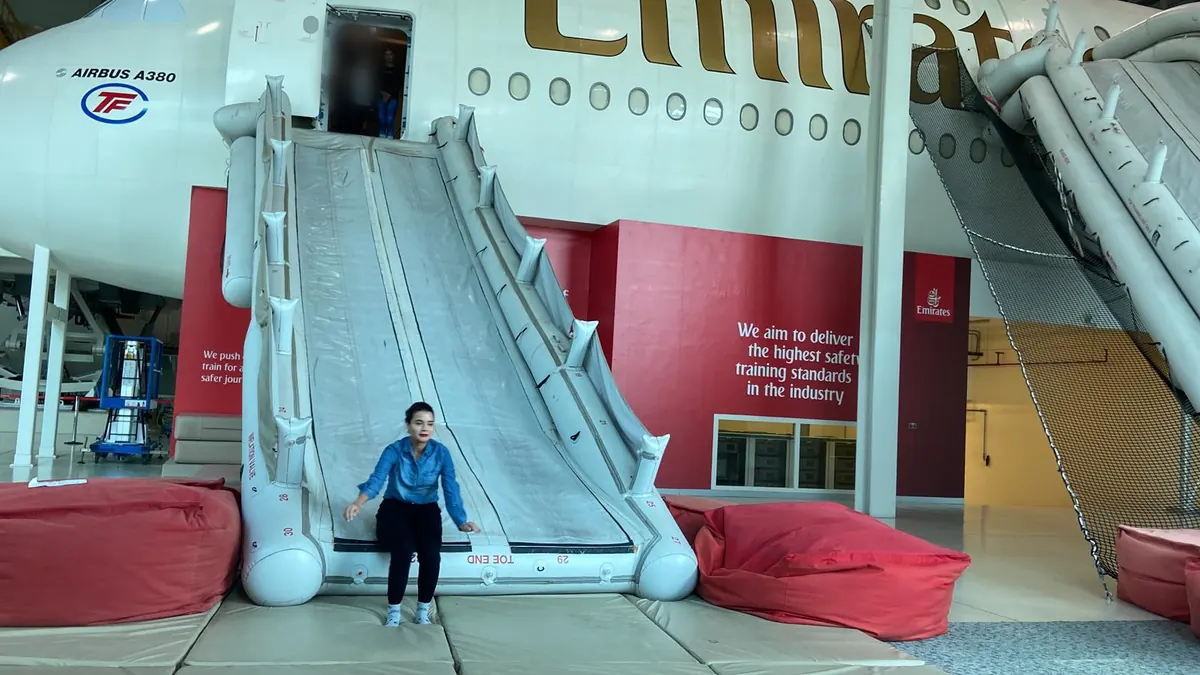
Safety is the heart of the job, and it is the most intense part of training. You practise in full-size aircraft trainers, opening real doors, shouting commands and evacuating the cabin against the clock.
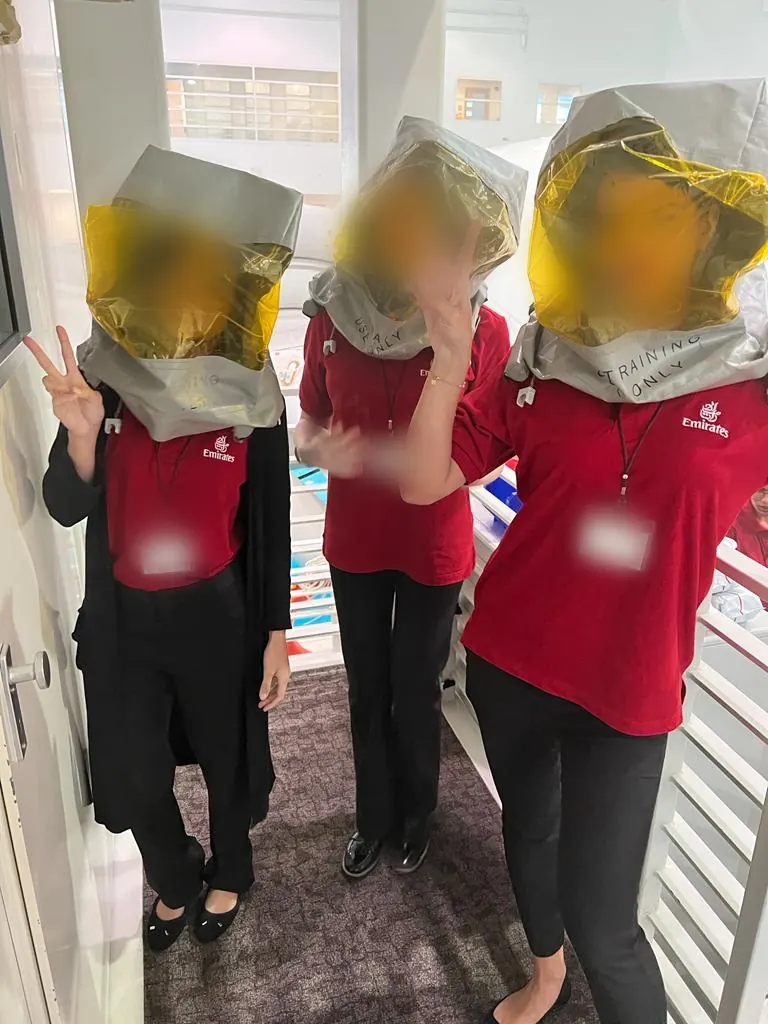
Yes, you really do jump down the evacuation slide. You also train with smoke hoods, which protect you from smoke so you can still fight a fire and help passengers. It looks funny in photos, but in the moment you are concentrating on every step.
Aircraft licences
Every aircraft is different: doors open differently, equipment is stored in different places and procedures change. You have to learn each type in detail and pass the assessment before you can work on it.
Finishing SEP and getting licensed on the A380 and the Boeing 777-300 and 777-200 was one of the happiest days of my training. There were still other modules to pass, but that day I knew the hardest part was behind me.
What a training day looks like
The days are long, and you will be tired. What helps most is your batch: the group you train with becomes your first family in Dubai.
- Early start, with grooming checked from day one.
- Classroom theory in the morning, often with short tests.
- Practical drills in the aircraft trainers in the afternoon.
- Evenings spent studying procedures and preparing for the next assessment.
How to pass training
Training is demanding. Daily study, organisation and taking safety seriously help you prepare for the assessments; no preparation method guarantees a pass.
- Study a little every evening instead of cramming before exams.
- Say the emergency commands out loud until they are automatic.
- Take grooming seriously from the first day.
- Ask questions. Trainers want you to succeed.
- Support your batch. Teamwork is assessed too.
- Sleep well. Long days with no rest make everything harder.
The day it all paid off
When training ends, you finally wear the full uniform and the hat. Throwing my hat in the air at the crew training college was the moment it felt real: after all the studying, drills and nerves, I was officially cabin crew.
Before you get to training, you need to pass the assessment day. Take the free Cabin Crew Readiness Quiz to see how prepared you are and what to work on first.
Frequently asked questions
Keep going
The Premium training turns this into structured practice: full modules with explanations for every answer and separate preparation tracks for Emirates, Qatar Airways and Etihad Airways — all independent practice material.